Are you scared to post your real opinion because some people you know might see it? That’s exactly why thousands of people are quietly starting anonymous blogs, a place to say what they truly think, with no real name and zero social consequences.
We are living in a world where opinions are judged and every word is screenshotted. Today, one honest post can cost you your job or bring any unnecessary drama you never asked for.
People are now craving a safe space to speak freely, to write about their real struggles, to speak unpopular truths, and to share controversial opinions.
In case you are a professional writer or someone with strong political views, anonymous blogging will give you a judgment-free space where your words matter more than your name.
Because sometimes the most powerful thing you can do is speak the truth anonymously.
Here, we will guide you on how to start your anonymous blog and how you can even host it anonymously. Writing anonymously comes together with hosting, and we will even tell you some great offers for hosting your anonymous blog.
What Is Anonymous Blog?
An anonymous blog is a website where the author hides their true identity, working under a pseudonym or total anonymity, to share thoughts freely without any consequences.
It is simply a blog where nobody knows who’s writing it. You use a fake name or pen name instead of using your real name. There is nothing related to your personal details that can link back to you.
You can use this for a simple reason, like if you want to talk about things that you cannot say openly. It could be related to your workplace or if you are dealing with any mental health condition. It could also be related to your political opinion or something you are experiencing in relationships.
It is not about hiding from something, but it is actually having the freedom to speak without your real-world identity getting in the way.
Anonymous Blog vs Pseudonymous Blog
Starting a blog is very exciting, but starting one where nobody knows who you are takes it to a completely different level.
You want to share thoughts, expose truths, or discuss sensitive information. Choosing between anonymous blogging and pseudonymous blogging is the very first decision that will shape everything about your blog.
Here we have given a clear, concise table for you to understand the difference.
| Factors | Anonymous Blogging | Pseudonym Blogging |
|---|---|---|
| Identity | No name, no persona, completely invisible. | With a fake name and a consistent persona, readers can follow |
| Audience connection | Very hard to build a loyal readership. | Easy to grow an audience over time. |
| Domain Privacy | Must use domain privacy protection to hide real WHOIS details | Register with fake persona details & domain privacy protection. |
| Legal Traceability | Harder to trace, but not impossible | Can be tracked through writing patterns and payment history. |
| Risk Level | Higher risk of full exposure if one mistake is made. | Lower risk if persona and domain privacy are managed carefully. |
| Best For | Sensitive topics, whistleblowing, and one-time content. | Building a private brand, growing audience, and long-term blogging. |
Pseudonym blogging wins for your long-term growth and sustainability, but both types must always protect their domain privacy without exception. You can choose based on what type of content you want to start or how long you will be in it.
You can go with anonymous blogging for the short term, but if you are seeking a long-term thing, then you must have a pseudonym for yourself.
Why People Start Anonymous Blogs?
In the past, there have been such events that plenty of famous writers, for one reason or another, have preferred to remain anonymous. They did so by publishing their work under a pseudonym.
Writers switch to anonymous blogging to achieve creative freedom, personal safety, and career protection. Anonymity can be a tool for writers to explore controversial topics or share sensitive information without risking their safety.
Whatever the reason, anonymous blogging is a powerful way to amplify voices that might otherwise go unheard.
Is It Legal to Start an Anonymous Blog?
Yes, it is perfectly legal to start an anonymous blog, but there are some important boundaries that you should know before starting your blog.
Anonymity does not make you untouchable or above the law. You still can face serious legal consequences if your blog crosses certain lines.
You can be easily held accountable for:
It is even important to understand that true anonymity is never fully guaranteed. It can happen, as courts can legally compel certain platforms, hosting companies, and domain registrars to reveal user information if your blog becomes part of a serious legal investigation.
So now you know that anonymous blogging is legal. Now we will walk through every step of how you can start your anonymous blogging.
We will also tell you how to host your blog on a DMCA-ignored hosting provider so your content stays live and uninterrupted, no matter what.
What is DMCA-ignored hosting?
DMCA-ignored hosting is a web hosting service based in countries outside US jurisdictions, like the Netherlands, Russia, or Iceland. Here, the American copyright laws do not apply, meaning your host can legally ignore DMCA takedown requests and keep your content live, no matter who complains.
It is a turning point for your anonymous blogging because it prevents people from silencing your voice through fake or strategic copyright complaints.
It ensures that your blog stays up, your identity stays protected, and your content keeps reaching people without anyone being able to shut it down overnight through any legal complaint.
Legal Risks You Should Be Aware Of
Even though anonymous blogging is legal, you can still be held accountable if your content violates certain factors. Here are some of the major legal risks that you should avoid in your anonymous blogging before publishing it.
- Defamation
It is the act of publishing fake information that could damage someone’s personal or professional reputation, which is defamation, and it is considered illegal, regardless of your name being there or not.
If the possibility occurs that someone can prove your content caused them harm, you can easily be traced and uncovered, even behind anonymity. - Privacy Violation
Sharing someone’s private information, personal details, or photos without their consent is a serious legal offense in most countries. If you expose private individuals without permission, then you can land in court regardless of how well you have hidden your identity. - Copyright Infringement
If you copy and publish someone else’s written content, images, and creative work without their permission or proper credit, then it is illegal. Even if you are an anonymous blogger, you will be fully liable for copyright violations on your blog. - Threats and Harassment
You should not post abusive content, make illegal threats, or run a targeted campaign to harm any specific person or community. This is criminal behaviour that authorities take very seriously and can easily trace you.
Anonymity protects your identity, but never protects your actions. So you should stay honest and ethical, so your anonymous blogging will never have a reason to be feared.
How to Start an Anonymous Blog In 2026? – Step-by-Step Guide
Let’s understand in detail how you can start your journey of anonymous blogging. It requires careful planning, the right tools, and your purpose.
You need to make a clear strategy so your real name stays protected, along with the right hosting company to keep your work going.

Let’s start with the steps.
Step 1 – Choose a Niche That Requires Anonymity
There are some niches that require anonymity. So selecting the right niche is an important decision and is considered the foundation of your anonymous blogging.
Your niche will determine your target audience, your content boundaries, and how much protection you actually need for your blog.
There are some niches where exposing your real name could cost you, like
The simple rule is that when you are choosing your niche, pick a topic where your honest voice is more valuable than your real name.
If the fear of writing about something is stopping you, then that could probably be your niche, you are meant to write anonymously.
Step 2 – Use a Secure Device & Private Internet Connection
Your device and internet connection are the very first places your real identity can leak. Never access your anonymous blog from your personal laptop or home Wi-Fi, as both leave traceable footprints like the following:
Step 3 – Register a Domain Name Privately
Your domain name is your blog’s address on the internet. Registering a domain name privately prevents your personal contact information (name, address, email) from being published in the public WHOIS directory that anyone can freely search.
Always register your domain using fake persona details and enable domain privacy protection during registration, replacing your real information with your registrar’s generic details and keeping your identity completely hidden.
Youstable is a highly recommended domain registrar that offers built-in domain privacy protection, making the entire process simple, affordable, and privacy-focused.
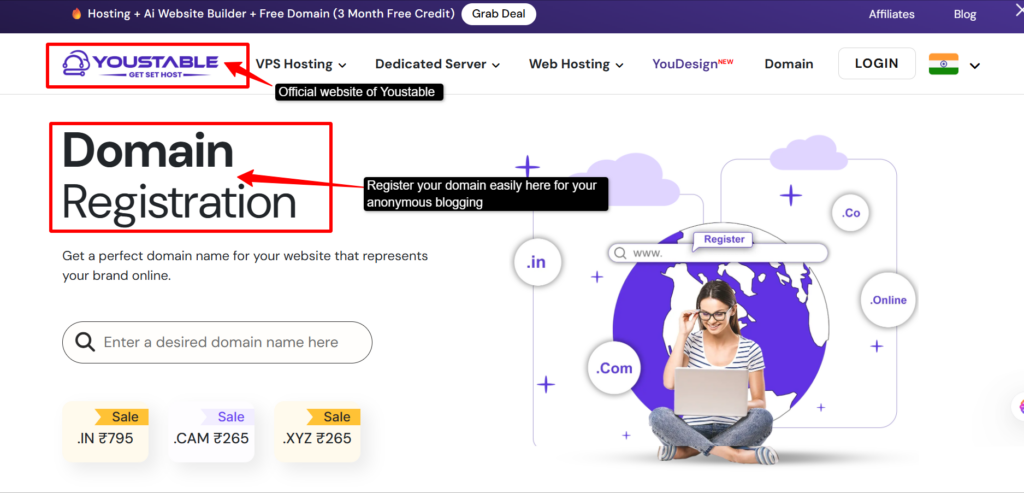
When you are choosing your domain name, pick something that has absolutely no connection to your real name, location, or workplace, and always pay using cryptocurrency or a prepaid credit card to avoid leaving any financial footprint that could be traced.
Step 4 – Choose Anonymous Blog Hosting
Your hosting provider is where your entire blog will live, so it has to be chosen wisely, because the wrong one can easily expose your identity.
Many regular hosting providers are legally required to hand over user information when requested by authorities and will even remove your content immediately the moment they receive any DMCA complaint, sometimes even without warning you.
So, for all kinds of anonymous blogging, you need a host that respects your privacy and keeps your content alive always.
This is where QloudHost is a perfect choice for anonymous bloggers. QloudHost brings offshore DMCA-ignored hosting solutions that keep your blog protected and uninterrupted.
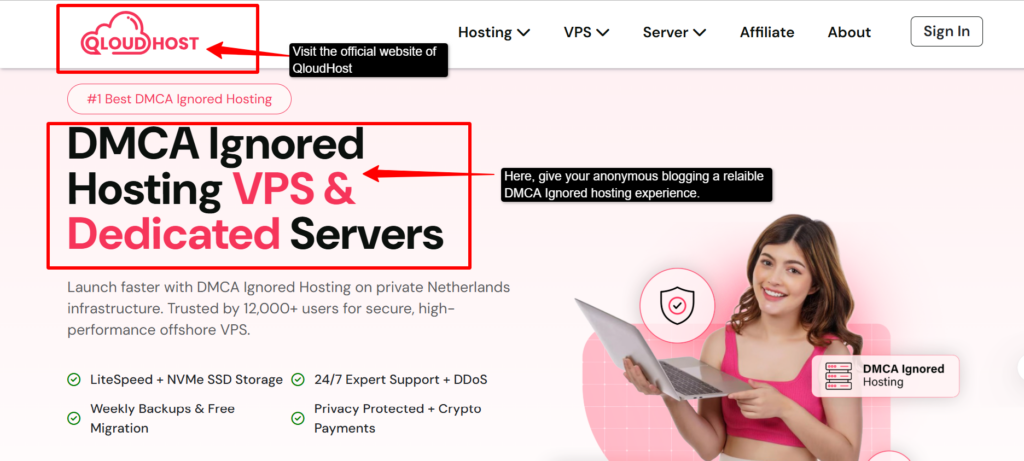
Even if someone tries to silence you through a takedown complaint, your content still stays live, and your identity stays safe.
Always try to pay using cryptocurrency for your signup, and use fake details everywhere to ensure there are no personal leads to your real one.
How can you buy Hosting for your Anonymous Blogging?
Now we will tell you easy and simple steps on how you can buy hosting for your anonymous blog with the best possible offers or discounts.
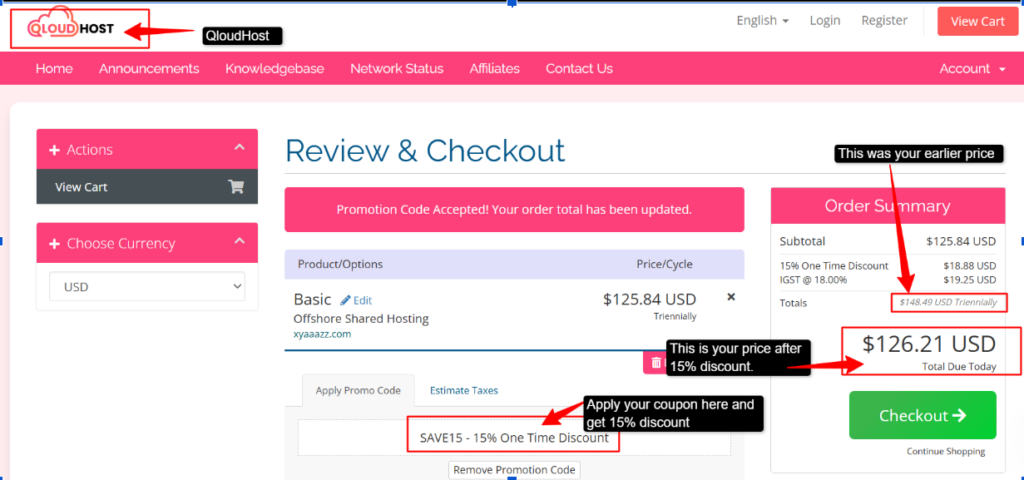
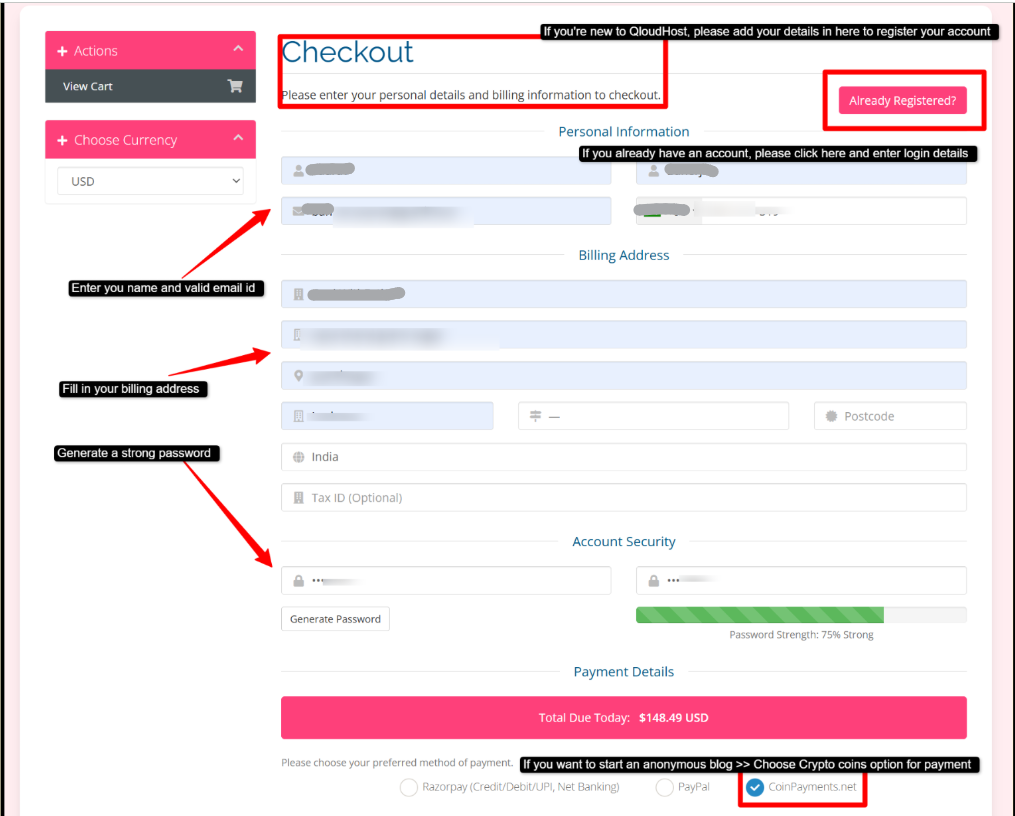
QloudHost shared hosting plans are already giving 20% OFF on their plans, but if you want an extra discount or a better offer, then you can choose the coupon SAVE15 and get the discount with an easy checkout, as you can see in the image we have attached.
Why Offshore Hosting Is Better for Anonymous Blogs?
Offshore hosting is better for anonymous blogs because it is based in countries outside the US and EU jurisdiction, meaning your host is not legally bound to comply with American or European copyright laws, government data requests, or DMCA takedown notices that could expose your identity or shut down your content.
This hosting gives your blogging an extra layer of legal and privacy protection that regular hosting providers simply cannot offer.
So, your voice is heard, and your content stays live.
Best Hosting Features for Anonymous Bloggers
An anonymous blog needs to be done within certain boundaries and criteria, which you need to keep in mind. These are certain major features that you need to adopt when you are thinking of starting your anonymous blog journey.
So if your host does not have any details about you, then it can hand over nothing.
These are some of the major features that you should keep in mind, because anonymous blogging is not just blogging, it needs much more than that.
Step 5 – Install a Blogging Platform
Once you are done with your domain and hosting setup, your next step is to install a blogging platform where you will actually create and publish your content.
Here, you have to choose wisely because your platform will determine how much control and flexibility you can have for your blog.
Use WordPress for Anonymous Blogging
WordPress is the best recommended choice for your anonymous blogging. It is a free and open-source content management system. It acts like a digital publishing platform where you can easily write, edit, and format your articles. You can add many images and videos to it without the need to enter any code for it.
It will give you complete control over your blog and your data, and it even comes with thousands of themes and plugins to customize everything just the way you want it to be.
Most of the hosting providers, including QloudHost, offer a one-click WordPress installation that can set everything up for you within minutes.
Static Blog vs Dynamic Blog
When you want to start the right way, choosing the right foundation for your anonymous blogging is very important.
You should be clear in your thoughts, like starting with a static or a dynamic blog. To make this choice, you first need to know the clear differences between them, like the following:
| Factor | Static Blogging | Dynamic Blogging |
|---|---|---|
| How it works | Pre-built HTML files are served directly. | Pages generated in real time through the database |
| Speed | Extremely fast | Slightly slower due to database queries |
| Security | Very secure, no database vulnerabilities | Requires regular updates and maintenance. |
| Anonymity Risk | Minimal digital footprint | Slightly higher risk if not properly secured. |
| Best For | Tech-savvy bloggers who want maximum security | Bloggers want ease and long-term growth. |
A dynamic WordPress blog hosted on a secure offshore provider like QloudHost is mostly recommended for anonymous bloggers. It is the most practical and powerful choice, giving you full control and an easy content management system (CMS).
Step 6 – Create an Anonymous Identity
This is the most critical step, as it separates you from your real identity and helps you stay protected in the long term.
Your anonymous identity is not just your fake name; it is a separate digital persona that you need to build and protect, just as you do with your real one.
Never use your personal credit card for your blog. Because any small mistake or slip will expose everything.
Step 7 – Secure Your Blog Properly
Securing your blog involves keeping it protected from hackers, spam, and data loss. You need to be very critical of this step, like
How to Hide Your Identity Completely While Blogging?
Hiding your identity completely while blogging means using a layered approach. that completely separates your digital footprint from your real-world persona. Keep in mind certain factors that could be your best safeguard factors or, if missed, could bring massive disaster as well.
Hide Your IP Address
Your IP address is the most revealing digital fingerprint; it can pinpoint your exact location and trace everything you do online directly back to you.
So, always use a trusted VPN that is combined with the Tor browser every single time you access your blog, your email, or anything remotely connected to your anonymous identity. Never skip this step even once.
Accept Anonymous Payments
If your blog generates income through sponsorships or subscriptions, then never accept payments through PayPal, bank transfers, or any platform that is linked to your real name.
Always use cryptocurrency like Bitcoin or Monero instead every time, as they allow completely traceless transactions that cannot be connected back to your real identity.
Avoid Writing-Style Identification
Your writing style is more unique than you think, like your sentence structure, vocabulary choices, and punctuation marks that can be easily analyzed and matched back to your real identity through a process called “stylometric analysis.”
So, try to consciously write differently from your real-life writing style, vary your sentence formations and lengths, and avoid phrases that you commonly use in your personal life.
Remove Metadata from Files
Every photo or document you upload to your blog contains hidden metadata, including your device, date, and time.
It can even track your GPS location sometimes, so always remove the metadata from every file before uploading using tools like ExifTool or MAT2, because any single image can reveal more about your identity than you even think.
Keep Personal and Blog Life Separate
Never cross the line between your real life and your anonymous blogging identity under any circumstances. Never mention your real city, birthdate, or any personal experience that is enough to identify you.
Always use different devices, separate email accounts, and separate social media platforms for everything. Just treat your anonymous blogging as an entirely different life that never touches your real one.
Cons of not using a VPN
If you are not using a VPN while blogging anonymously, it simply means that your real IP address is fully visible and automatically logged by your Internet service provider, hosting provider, and every platform you interact with.
Anyone from your hosting provider to law enforcement can easily trace your IP address just by making a simple request. So using a VPN is an absolute non-negotiable foundation of your anonymous blogging setup.
Best Niches for Anonymous Blogging in 2026
There are some of the best possible niches that you can use for your anonymous blogging in 2026.
After studying the trends, we have found some of the best niches that you can use. Before selecting your niche, be clear about what interests you the most and how long-term you can make it work, like
- Digital Marketing
- Tech and AI Tools.
- Health and Fitness
- Personal finance & investing.
- Remote Work & Digital Lifestyle.
- Political & Social Commentary.
- Whistleblowing & Corporate Exposes.
- Mental Health & Personal Struggles.
- Relationships & Dating Experiences.
- Finance & Career Secrets.
These are the best nieces you can go see in 2026; otherwise, you can even choose from what interests you or what you want to investigate.
Anonymous Blog vs. Regular Blog: Which One Is Better?
Anonymous blogging and regular blogging both give you a platform to share your voice with the world, but the way you show up, the freedom you get, and the risks you carry are completely different.
We will make it clear so you can understand the difference between the two, so you can decide for your blog and how it needs to reach people.
| Factors | Anonymous Blog | Regular Blog |
|---|---|---|
| Identity | Fake name or no name at all | Real name & personal brand |
| Freedom of Expression | Complete freedom to write anything without fear. | Limited by personal & professional reputation. |
| Privacy | High, real identity is fully protected. | Low, fully public, and traceable. |
| Monetization | Challenging but possible through crypto and anonymous methods. | Easy through ads, sponsorships, and affiliates. |
| Domain Privacy | Essential | Optional |
| VPN requirement | Non-negotiable every single time. | Not necessary. |
| Best For | Sensitive topics, whistleblowing & controversial opinions. | Personal branding, business growth & public influence. |
The choice between anonymous and regular blogging comes down to one simple question only:
Do you value your freedom of expression more than your public identity, or your public identity more than your freedom to speak without limits?
So, choose wisely.
FAQs
Can I start a blog without showing my real name?
Yes, absolutely. You can easily start your blogging without using your real name. Many writers and creators use pseudonyms or fake names to protect their privacy and freely post about sensitive or controversial topics. You should also have a clear separation between your personal and professional life.
Can I get in trouble for anonymous blogging?
Yes, definitely, you can get in trouble for your anonymous blogging. If your posted content is illegal as in defamation, threat/harassment, or hate speech, then victims or higher authorities can easily file a lawsuit and unmask your identity and hold you accountable legally.
What is ghost blogging?
Ghost blogging simply means you hire a writer to produce content without receiving the direct credit, and it can even happen in one more way, where you use the platform of Ghost, which is a popular, open-source content management and newsletter publishing platform.
Do anonymous bloggers get money?
Yes, anonymous bloggers can and do make money. Anonymous bloggers typically generate money the same way regular bloggers do, like display advertising, sponsorship, and affiliate marketing. As long as it is not related to any controversial or heated opinion, anonymous blogging can help you with monetization just like regular blogging.
How do I receive payments anonymously?
Receiving payment anonymously is possible, but it does require you to follow certain features for anonymous blogging. You can receive payments using decentralized cryptocurrencies. You should always use privacy-focused payment methods and create anonymous business accounts.
Is WordPress safe for anonymous blogging?
Yes, WordPress is safe for anonymous blogging but only if you use a self-hosted WordPress.org site. Always take the important, specific precautions in order to protect your identity across web hosting and domain registration and keep your digital footprint safe.
Do I need offshore hosting for anonymity?
Yes, obviously, offshore hosting is very important for anonymity if you want to protect your identity from the public, so you should use offshore hosting with privacy-friendly payment methods. You can go for QloudHost, a premium offshore hosting platform that completely support s your anonymity and makes your journey better and easier.
Can Google track anonymous bloggers?
Yes, Google can track anonymous bloggers through their IP addresses and browsing habits. They can even track you by your login session and cross-site tracking. So, always keep your anonymous blogging protected using critical safety measures.
Conclusion
Your voice matters, with no fear or judgment.
Anonymous blogging is not about hiding who you are, but it is about having the courage to say what needs to be said and share what needs to be shared. You can freely speak the truth the world needs to hear, all this without putting your real life or career at risk.
You know how you can protect your identity, choose the right hosting provider for yourself, and avoid the mistakes that can expose your identity. The only thing left is your decision to start today.
The world does not need another filtered blog written by someone too afraid to say what they really think. Anonymous blogging needs your raw, honest, and unfiltered voice. So stop waiting for the right time and stop letting fear make your decisions.
Set up your domain today with YouStable, launch on a privacy-focused VPN with QloudHost hosting, and publish the first post that you have been holding back for too long.
The only question left is, what are you waiting for?