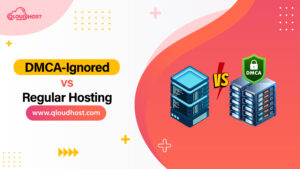
If you’ve ever searched for a hosting solution that gives you more control over your content, you’ve probably come across two terms — DMCA Ignored VPS and Regular VPS. On the surface, both are Virtual Private Servers that give you dedicated resources, root access, and solid performance. But underneath, they operate in completely different ways when it comes to content policies, jurisdiction, and how they handle copyright complaints.
Choosing the wrong one can mean your website gets taken down overnight — or that you pay for features you simply don’t need.
Here, we’ll break down exactly what sets DMCA Ignored VPS apart from a Regular VPS, compare them side by side across every important factor, and help you figure out which one is the right fit for your specific project — whether you’re running a media site, a privacy-focused blog, a streaming platform, or a standard business website.
By the end of this article, you’ll know precisely which type of VPS to choose, and why.
What is DMCA? And Why It Matters for Hosting
The Digital Millennium Copyright Act (DMCA) is a United States copyright law that was signed in 1998. Its primary purpose is to protect the rights of content creators and copyright holders by making it illegal to reproduce, distribute, or host copyrighted material online without proper authorization.
Under this law, if a copyright holder finds their content being used without permission on a website, they can file a DMCA takedown notice directly with the hosting provider.
Once the hosting provider receives this notice, they are legally required to take down the infringing content — or risk facing serious legal consequences themselves.
This is where hosting becomes directly affected.
If your hosting provider is based in the United States — or operates under US jurisdiction — they are legally bound to comply with every DMCA takedown request they receive. This means that even if you believe your content is legitimate, your host can suspend your website or delete your files the moment a complaint lands in their inbox, often without giving you a chance to respond.
Why Does This Matter for Website Owners?
For many website owners, this creates a major problem. Content that is perfectly legal in one country may still trigger a DMCA complaint if a US-based rights holder decides to file one. This is especially common for:
The DMCA system was designed to protect creators, but in practice it has also become a tool that can be misused to suppress legitimate content — and it puts hosting providers in a difficult position.
How Do DMCA Ignored Hosts Avoid This?
DMCA Ignored hosting providers solve this problem by operating from countries that are outside US jurisdiction — such as the Netherlands, Moldova, Malaysia, or Romania. These countries have their own copyright laws, which are often more lenient or simply do not recognize US DMCA notices as legally binding.
As a result, when a DMCA takedown notice is sent to an offshore hosting provider, they are under no legal obligation to act on it. Your content stays online, and your website keeps running.
This is the fundamental reason why DMCA Ignored VPS hosting exists — and why it has become a popular choice for website owners who need greater content freedom and protection from unfair takedowns.
What is a VPS?
A Virtual Private Server (VPS) is a type of web hosting that gives you your own dedicated portion of a physical server.
Unlike shared hosting, where hundreds of websites share the same resources, a VPS uses virtualization technology to divide one powerful physical server into multiple isolated environments, each acting like a completely independent server.

This means you get your own allocated RAM, CPU, storage, and bandwidth that no other user can touch. You also get full root access, which means you can install any software, configure your server environment, and manage everything exactly the way you want — just like you would with a dedicated server, but at a fraction of the cost.
How Does a VPS Work?
Think of a physical server as a large apartment building. Shared hosting is like renting a single room in a crowded dormitory — you share the kitchen, bathroom, and common areas with everyone else. A VPS is like renting your own private apartment in the same building — you have your own separate space, your own lock, and nobody else can walk in.
The technology that makes this possible is called a hypervisor — software that sits between the physical hardware and the virtual machines, managing and isolating each VPS from the others. Popular hypervisors used by hosting providers include KVM (Kernel-based Virtual Machine) and OpenVZ.
Key Features of a VPS
A standard VPS — whether DMCA ignored or regular — typically comes with the following:
VPS vs Shared Hosting vs Dedicated Server – Quick Overview
| Feature | Shared Hosting | VPS Hosting | Dedicated Server |
|---|---|---|---|
| Resources | Shared | Dedicated (virtual) | Fully dedicated |
| Performance | Low | Medium–High | Highest |
| Control | Limited | Full root access | Full root access |
| Cost | Cheapest | Moderate | Most expensive |
| Best for | Small blogs | Growing websites, apps | Enterprise-level sites |
A VPS sits in the sweet spot — offering the power and control of a dedicated server, while remaining affordable enough for individuals, developers, and growing businesses. This is exactly why VPS hosting, both regular and DMCA ignored, has become the go-to choice for serious website owners worldwide.
What is DMCA Ignored VPS?
A DMCA Ignored VPS is a Virtual Private Server hosted in a country that does not fall under US jurisdiction and is therefore not legally obligated to comply with DMCA takedown requests.
These servers are typically hosted in offshore locations such as the Netherlands, Moldova, Malaysia, or Romania, countries that operate under their own independent copyright laws and do not recognize US DMCA notices as binding.
In simple terms, when a copyright holder sends a DMCA complaint to a DMCA ignored hosting provider, the provider is not required to take any action. Your website stays online, your files remain intact, and your business continues without interruption.
This makes DMCA Ignored VPS an extremely powerful tool for website owners who need consistent uptime and content freedom — without the constant fear of unexpected takedowns.
How Does a DMCA Ignored VPS Work?
When you host your website on a regular VPS based in the US or a country that follows US copyright law, here is what happens when a DMCA notice is filed against your content:
With a DMCA Ignored VPS, this process breaks down at step 3. Because the server is physically located in an offshore jurisdiction, the hosting provider operates under local laws — not US copyright law. They are not legally required to act on the DMCA notice, and in most cases, they simply forward it to you for review and let you decide how to respond.
This gives you full control over your own content — without a third party making that decision for you.
Benefits of DMCA Ignored VPS
Choosing a DMCA Ignored VPS comes with a significant set of advantages that go well beyond just avoiding takedown notices. Here is a detailed look at what you gain:
Who Uses DMCA Ignored VPS? – Common Use Cases
DMCA Ignored VPS is not just for one type of user. It serves a wide range of legitimate purposes across many industries:
DMCA Ignored VPS vs Regular VPS – Full Comparison Table
Now that we have covered both types of VPS hosting in detail, let’s put them side by side so you can see exactly how they differ across every important factor.
| Feature | DMCA Ignored VPS | Regular VPS |
|---|---|---|
| Jurisdiction | Offshore (Netherlands, Moldova, Malaysia, Romania) | US, UK, Germany or similar |
| DMCA Compliance | Not required — notices ignored | Legally required to comply |
| Content Freedom | High — fewer content restrictions | Limited — strict content policies |
| Privacy Level | High — privacy-friendly jurisdictions | Standard — subject to local laws |
| Anonymous Payments | Yes — Bitcoin, Monero, crypto accepted | Rarely — mostly cards and PayPal |
| Takedown Risk | Very low — complaints not acted upon | High — content removed within 24–72 hrs |
| Uptime Security | Protected from copyright-based disruptions | Vulnerable to DMCA-triggered suspensions |
| Legal Compliance | Operates in a legal grey area in some cases | Fully compliant with international copyright law |
| Cost | Slightly higher due to offshore infrastructure | Generally more affordable |
| Provider Options | Fewer, specialized offshore providers | Hundreds of providers worldwide |
| Customer Support | Varies — some providers offer 24/7 support | Typically strong — 24/7 support standard |
| Best For | Media sites, streaming, adult content, torrents, privacy-focused projects | Business websites, e-commerce, SaaS, blogs, corporate sites |
| Payment Methods | Crypto, prepaid cards, anonymous methods | Credit cards, PayPal, bank transfers |
| KYC Requirements | Often none — sign up anonymously | Usually required — identity verification needed |
| Server Performance | Same as regular VPS — dedicated resources | Same as DMCA ignored VPS — dedicated resources |
Key Takeaways from the Comparison
Looking at the table above, a few things stand out clearly:
The right choice ultimately depends on what kind of website you are running and what your priorities are — which we will cover in detail in the upcoming sections.
Best Countries for DMCA Ignored Hosting
One of the most important factors that determines whether a VPS is truly “DMCA ignored” is the country where the server is physically located. Not all offshore locations are equal — some offer stronger privacy laws, better infrastructure, and more content-neutral legal frameworks than others.
Here is a detailed look at the best countries for DMCA ignored hosting and what makes each of them stand out.
Netherlands 🇳🇱
The Netherlands is widely considered the gold standard for DMCA ignored hosting — and for good reason. It is home to one of the most advanced internet infrastructures in the world, with Amsterdam serving as a major global internet exchange point (AMS-IX), which means exceptional connectivity and low latency for users across Europe and beyond.
From a legal standpoint, the Netherlands operates under Dutch copyright law and EU regulations — neither of which requires compliance with US DMCA notices. Dutch hosting providers have a well-established tradition of defending their customers’ right to keep content online unless a Dutch court orders otherwise. This makes the Netherlands one of the most legally robust and technically reliable jurisdictions for offshore hosting.
Best for: Streaming sites, media platforms, privacy-focused projects, and any website that needs both high performance and strong content freedom.
Moldova 🇲🇩
Moldova has become an increasingly popular destination for DMCA ignored hosting, particularly for users who need maximum content freedom at a lower price point. Located in Eastern Europe, Moldova operates under its own copyright framework that is largely independent of US and EU enforcement mechanisms.
Moldovan hosting providers are known for their highly permissive content policies and are often chosen by operators of adult websites, file hosting platforms, and other content-heavy projects. Prices are generally lower than Netherlands-based hosting, making Moldova an attractive option for budget-conscious users who still need offshore protection.
Best for: Adult content, file hosting, high-volume content platforms, and cost-sensitive projects.
Malaysia 🇲🇾
Malaysia is a strong option for DMCA ignored hosting in the Asia-Pacific region. Operating under its own Communications and Multimedia Act, Malaysia does not comply with US DMCA notices and offers a favorable environment for offshore hosting with good regional connectivity.
Malaysian hosting providers often offer competitive pricing combined with solid infrastructure, making them a popular choice for users targeting audiences in Southeast Asia, Australia, and the broader Asia-Pacific region. The legal framework in Malaysia gives hosting providers significant discretion in how they handle content complaints, which translates into better protection for website owners.
Best for: Asia-Pacific focused websites, streaming platforms, and projects targeting regional audiences outside the US and Europe.
Romania 🇷🇴
Romania is another well-established jurisdiction for DMCA ignored hosting in Europe. While Romania is an EU member state, it has historically been one of the more lenient European countries when it comes to enforcing copyright-related hosting restrictions. Romanian hosting providers are known for offering strong privacy protections and are generally slow to act on DMCA-style complaints unless compelled by a Romanian court order.
Romania also benefits from excellent European internet infrastructure, with good connectivity across the continent and relatively affordable server costs compared to Western European alternatives.
Best for: Privacy-focused websites, European audiences, and projects that need EU-based infrastructure without strict copyright enforcement.
Russia 🇷🇺
Russia operates entirely outside US legal jurisdiction and has its own independent internet regulatory framework. Russian hosting providers are not bound by DMCA regulations in any way, and they tend to have very permissive content policies for offshore customers.
However, it is worth noting that Russia comes with its own set of regulatory complexities — including potential government surveillance and content restrictions imposed by Russian authorities. For users who prioritize freedom from US copyright law specifically, Russia can be an option, but it requires careful consideration of the local legal environment.
Best for: Users specifically seeking non-US, non-EU jurisdiction with maximum independence from Western copyright enforcement.
Quick Country Comparison
| Country | DMCA Compliance | Infrastructure | Privacy Level | Cost | Best Region Served |
|---|---|---|---|---|---|
| Netherlands | None | Excellent | Very High | Medium | Europe, Global |
| Moldova | None | Good | Very High | Low | Europe, Global |
| Malaysia | None | Good | High | Low–Medium | Asia-Pacific |
| Romania | None | Good | High | Low–Medium | Europe |
| Russia | None | Medium | Medium | Low | Global |
Is DMCA Ignored VPS Legal?
This is one of the most commonly asked questions about offshore hosting — and the answer is more straightforward than most people expect.
Yes, using a DMCA Ignored VPS is legal.
Purchasing and using a VPS hosted in an offshore jurisdiction is completely legal in itself. There is nothing illegal about choosing a hosting provider located in the Netherlands, Moldova, or Malaysia instead of the United States. Businesses and individuals make hosting decisions based on jurisdiction, price, performance, and policy every single day — and offshore hosting is a well-established, legitimate industry that has operated openly for decades.
The legality question does not come from where your server is located. It comes from what content you choose to host on it.
Difference Between Legal and Illegal Use
DMCA Ignored VPS hosting exists in a space that is often misunderstood. Here is a clear breakdown of what is legal and what is not:
Legal uses of DMCA Ignored VPS:
- Hosting a website with original content that you own
- Running a privacy-focused blog or news platform
- Operating a streaming or media platform under your local country’s laws
- Hosting adult content that is legal in both your country and the server’s jurisdiction
- Running cryptocurrency or blockchain-related projects
- Protecting your content from bad-faith or erroneous DMCA takedown requests
- Hosting user-generated content platforms where you are not directly responsible for every upload
Illegal uses — regardless of where your server is located:
- Hosting child sexual abuse material (CSAM) — this is illegal everywhere without exception
- Running phishing websites or fraud operations
- Distributing malware, ransomware, or malicious software
- Operating spam networks or botnet infrastructure
- Hosting content that directly violates the local laws of the server’s country
The key point here is this — DMCA Ignored does not mean law ignored. Every hosting provider, no matter how permissive, operates within the legal framework of their own country. They will still take action against content that violates their local laws or crosses absolute ethical and legal boundaries.
What About Copyright Infringement?
This is where things get more nuanced. Hosting copyrighted material without authorization is technically illegal under most countries’ laws — not just US law. However, the practical enforcement of copyright law varies enormously from country to country.
In the United States, the DMCA creates a very efficient takedown mechanism that allows copyright holders to remove content quickly and with minimal legal friction. In offshore jurisdictions like the Netherlands or Moldova, the process is far more complex — a copyright holder would need to pursue legal action through local courts, which is expensive, time-consuming, and often impractical for routine complaints.
This is why DMCA ignored hosting does not make copyright infringement legal — it simply makes enforcement significantly harder and less automatic. For many website operators, this distinction is exactly what they need to keep their platforms running without constant disruption from automated takedown systems.
Should You Be Concerned About Legal Risk?
If you are using a DMCA Ignored VPS for legitimate purposes — hosting your own content, running a privacy-focused platform, or operating a business that is legal in your home country — your legal risk is extremely low.
The users who face genuine legal risk are those who use offshore hosting as a cover for activities that are illegal under any jurisdiction — fraud, malware distribution, or content that is universally prohibited. For those use cases, no hosting provider — DMCA ignored or otherwise — will protect you indefinitely.
For the vast majority of legitimate users, a DMCA Ignored VPS simply provides a more content-neutral hosting environment that protects them from the aggressive and sometimes abusive application of US copyright law — nothing more, and nothing less.
Disclaimer: This article is intended for informational purposes only and does not constitute legal advice. If you have specific concerns about the legality of your content or hosting setup, please consult a qualified legal professional in your jurisdiction.
Which One Is Right for You?
By now you have a clear picture of what both types of VPS hosting offer. The final question is simple — which one actually fits your specific situation?
The answer depends entirely on three things: what kind of content you are hosting, how much privacy you need, and what your biggest operational risk is. Let’s break it down so you can make the right call with confidence.
Choose DMCA Ignored VPS If…
Choose Regular VPS If…
Quick Decision Guide
Still not sure? Use this simple guide to make your decision in under a minute:
| Your Situation | Recommended Choice |
|---|---|
| Hosting original content, business website | Regular VPS |
| Running a media or streaming platform | DMCA Ignored VPS |
| Need anonymous sign-up and crypto payment | DMCA Ignored VPS |
| E-commerce or SaaS application | Regular VPS |
| Adult content website | DMCA Ignored VPS |
| Budget is the top priority | Regular VPS |
| Journalist, activist, or whistleblower | DMCA Ignored VPS |
| Previously experienced unfair takedowns | DMCA Ignored VPS |
| Regulated industry (finance, healthcare) | Regular VPS |
| File hosting or torrent-related site | DMCA Ignored VPS |
| Starting a personal blog | Regular VPS |
| Audience primarily outside the US | DMCA Ignored VPS |
Whatever your choice, the most important thing is to match your hosting environment to your actual needs — not to over-engineer it or under-protect it. If you are still unsure which direction to go, QloudHost offers both DMCA Ignored VPS and guidance to help you make the right decision for your specific project.
FAQs
Q1: Is DMCA Ignored VPS the same as bulletproof hosting?
Not exactly. These two terms are often used interchangeably, but they are not the same thing. DMCA Ignored VPS specifically refers to hosting that does not comply with US DMCA takedown requests due to its offshore jurisdiction. Bulletproof hosting is a broader term that refers to hosting providers who are resistant to all kinds of legal complaints — including spam reports, fraud complaints, and law enforcement requests — often with very few restrictions on content. DMCA Ignored VPS is a legitimate and widely used hosting solution, while bulletproof hosting often carries more serious legal and reputational risks. Not every DMCA ignored host is a bulletproof host.
Q2: Can I use DMCA Ignored VPS for my WordPress website?
Yes, absolutely. A DMCA Ignored VPS works exactly like any regular VPS from a technical standpoint. You can install WordPress, configure your preferred control panel such as cPanel, Plesk, or CyberPanel, set up your domain, and run your website exactly as you would on any other VPS. The only difference is the jurisdiction your server operates in — not the software compatibility or technical capabilities.
Q3: Will my website be completely safe from all takedowns on a DMCA Ignored VPS?
A DMCA Ignored VPS protects you specifically from US-based DMCA takedown notices. However, it does not make your website immune to every possible form of legal action. If your content violates the local laws of the country where your server is hosted — for example, Dutch law in the case of Netherlands-based hosting — your provider may still be compelled to act by a local court order. Additionally, content that is universally illegal, such as child abuse material or malware distribution, will never be protected by any hosting provider regardless of jurisdiction.
Q4: Is DMCA Ignored VPS more expensive than Regular VPS?
Generally, yes — but not dramatically so. DMCA Ignored VPS hosting tends to cost slightly more than equivalent regular VPS plans because the market is more specialized and the provider pool is smaller. However, the price difference is often modest, and for users who genuinely need content freedom and offshore jurisdiction, the additional cost is well justified. Many quality DMCA ignored VPS plans are available starting from around $10 to $20 per month, which is comparable to mid-range regular VPS pricing.
Q5: Can I pay for DMCA Ignored VPS anonymously?
Yes. Most DMCA ignored hosting providers accept anonymous payment methods including Bitcoin, Monero, Ethereum, Litecoin, and other cryptocurrencies. Many also accept prepaid cards and other payment methods that do not require you to link a bank account or reveal your identity. This is one of the key advantages of DMCA ignored hosting over regular VPS providers, who typically require credit card or PayPal payments tied to a verified identity.
Q6: Which country is the best for DMCA Ignored VPS hosting?
The Netherlands is widely regarded as the best overall jurisdiction for DMCA ignored hosting due to its world-class internet infrastructure, strong privacy laws, and well-established legal tradition of content neutrality. For users who prioritize affordability over infrastructure quality, Moldova is an excellent alternative. For users targeting audiences in the Asia-Pacific region, Malaysia offers a strong combination of offshore protection and regional connectivity.
Q7: Does DMCA Ignored VPS affect my website’s SEO or performance?
No. The jurisdiction of your hosting provider has no direct impact on your website’s SEO performance or server speed. What matters for SEO is server response time, uptime reliability, and the geographic proximity of your server to your target audience. A high-quality DMCA ignored VPS in the Netherlands will deliver excellent performance and uptime for European audiences — which is perfectly fine from a Google ranking perspective. In fact, choosing a server location closer to your primary audience can actually improve your page load times and positively impact your SEO.
Conclusion
Choosing between a DMCA Ignored VPS and a Regular VPS is not a matter of one being better than the other — it is a matter of choosing the one that is right for your specific situation.
If you run a standard business website, an e-commerce store, or a corporate application where copyright compliance is straightforward and content freedom is not a concern — a Regular VPS from a reputable provider gives you the best combination of price, support, and infrastructure.
But if you operate a media platform, a streaming site, an adult content website, or any project where content freedom, privacy, and protection from unfair takedowns are critical to your operations — a DMCA Ignored VPS hosted in an offshore jurisdiction like the Netherlands, Moldova, or Malaysia is not just a good option. It is the only option that gives you the protection and continuity your business genuinely needs.
The key things to remember from this guide:
- DMCA Ignored VPS is legal — the difference is jurisdiction, not legality
- Both types offer identical technical performance — the distinction is purely about content policy
- The Netherlands remains the gold standard for offshore DMCA ignored hosting worldwide
- DMCA ignored does not mean law ignored — absolute limits still apply
- Anonymous payments, no KYC, and strong privacy protections are standard features of offshore hosting
- The right choice depends entirely on your content, your audience, and your risk profile
Whether you are just getting started with VPS hosting or looking to migrate away from a provider that keeps taking your content down — understanding this distinction puts you in a far stronger position to make a decision that protects your website, your content, and your business long term.
If you are ready to explore DMCA Ignored VPS hosting for your project, QloudHost offers reliable offshore VPS solutions hosted in privacy-friendly jurisdictions — built specifically for website owners who need content freedom without compromising on performance or uptime.