Well, if you’re into trading, you might know the importance of speed and accuracy. You can’t invest your money in the right place without comparing stock prices and equity curves.
And if you don’t take profit (when the price goes up) and stop loss at the right time, you could lose your money. Managing all these things together can be quite difficult for a common man because we’ve other stuff to do as well.
So what’s the solution? It’s an AI agent, the master of multitasking. These tools are specifically designed for trading, so they can analyze every minute change in the market on the behalf of traders and give real-time updates to them that are difficult to track.
Here we’re gonna tell you an easy way how you can create an AI agent for trading, we’re also gonna tell you why you need an AI agent for trading, types of AI agents used in trading and a lot more interesting things.
An AI agent is like a digital assistant that completes your assigned tasks using machine learning.
It converts human language into machine language and performs tasks like deep research, coding, problem-solving, reasoning, data analysis, and image generation.
When you assign this agent a task, such as research, it visits thousands of websites for information and provides you with structured data. In very easy words, it can complete hours of manual work in minutes.
Large firms use these agents to automate complex and time-consuming tasks, and now, because of this ability, they are also being used in trading to analyze changing market trends, graphs, curves, predict profit and automatically trade in real time.
How an AI Agent Works in Trading?
If you’re still a noob to trading and are hesitant to invest, then don’t worry as these AI agents will act as the trading experts for you in real-time because they follow a strict workflow that contains:
Market data ingestion: You cannot examine multiple charts and compare stock prices together but an AI agent can read real-time stocks, economic reports, and day-by-day/year price graphs by location or country. So at first, it collects all this data, stores it in one place, and extracts meaningful insights from it.
Signal generation: As a trader, you might get confused due to rumours and place order at the wrong stock but AI uses reasoning. Based on the extracted data, the AI calculates the expected profit or loss. If AI predicts a price increase, it sends a signal for the next step.
Trade execution: Sometimes traders loose profit because of time delays between the exchange rate and purchase. But AI communicates with the broker’s platform using direct API connectivity and low-latency data transfer, executing the trade as quickly as possible (less than milliseconds).
Feedback loop: Finally, the AI agent checks whether it invested the money in the right place or not. If the trade makes a profit, it reinvests based on that output, and if the results are negative, it updates itself to avoid doing this again.
How to Create an AI Agent for Trading? Step-by-Step Process
Building an AI trading agent requires the right mix of data, strategy, and automation. This step-by-step guide walks you through creating a smart trading bot that can analyze markets and execute trades efficiently.
First choose an automation tool like n8n that will help you create a structured workflow for trading >> You can choose an n8n hosting from QloudHostas per our budget.
Then, select a forex API like twelvedata to collect market data and economic reports. You have to choose another API like Alpha Vantage or newsapi that will read the market sentiments and trends.
And if you don’t have an account on OpenAI and Telegram then make it because we’re going to use them too.
Now, here comes the main purpose of our blog! Just follow these simple guidelines given below to understand How to Create an AI Agent for Trading (e.g., Swing trading):
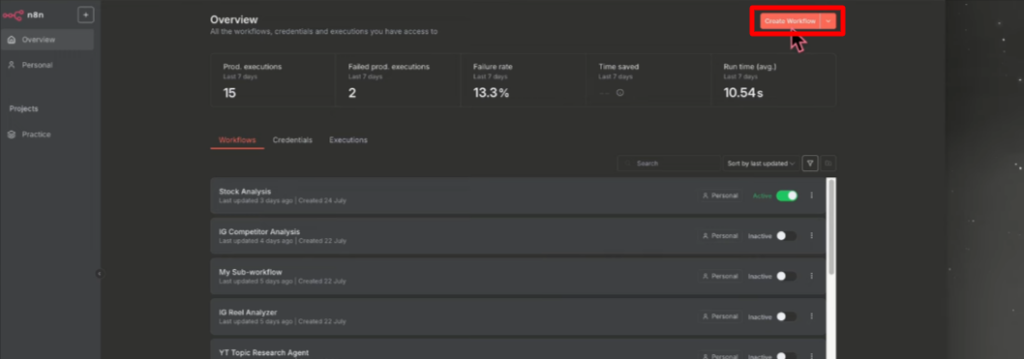
Open n8n >> dashboard >> create workflow
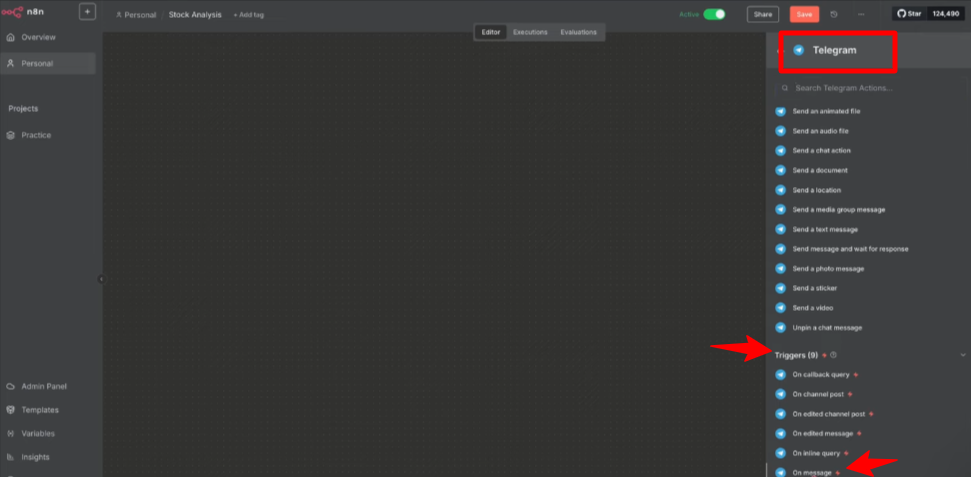
Hit the plus sign at top right corner >> type telegram >> select on message >> open docs
( It will open BotFather telegram bot )
Click newbot >> rename it.
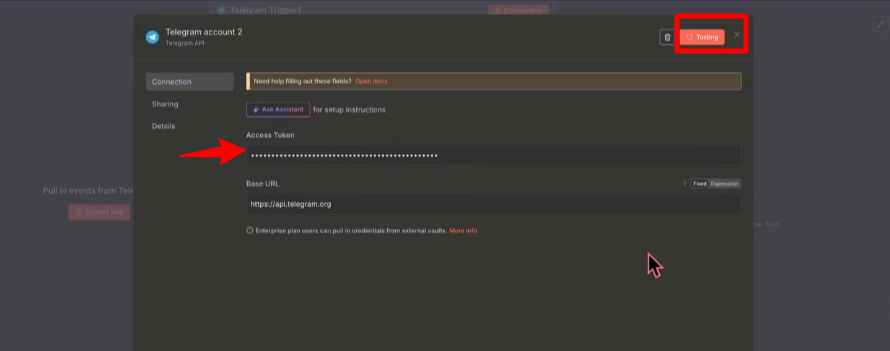
Copy API key >> paste in Access Token (n8n) >> save
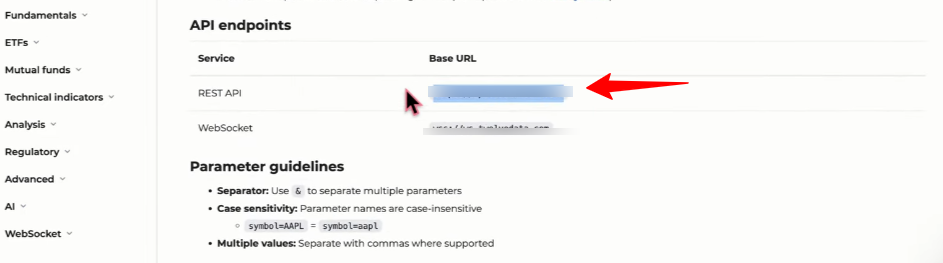
Open twelvedata >> API endpoints >> copy REST API url
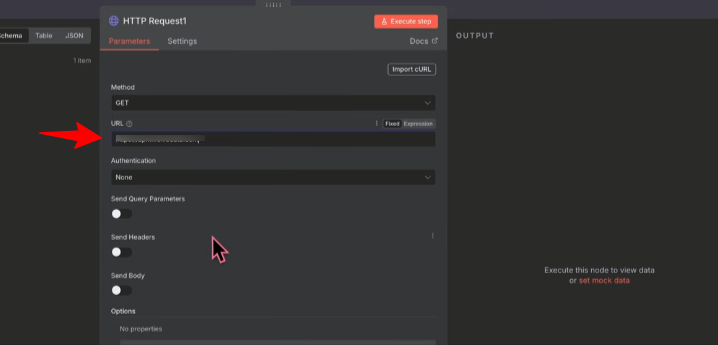
Go back to n8n tool >> click + button >> paste the URL
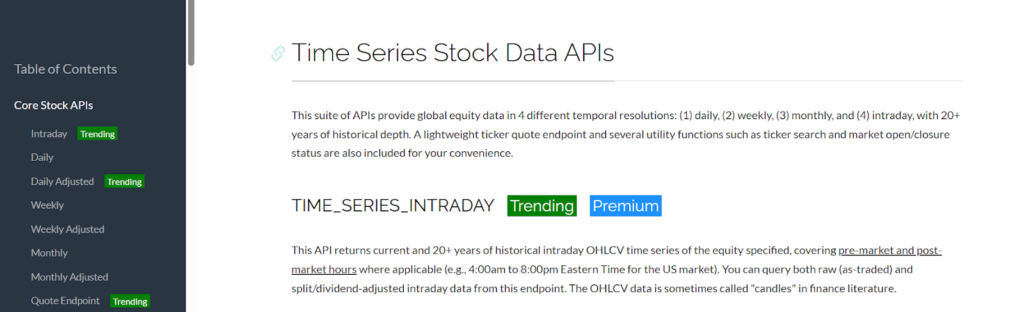
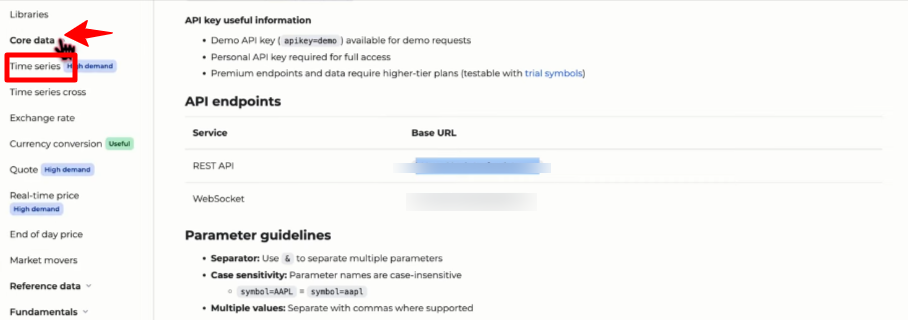
Open API documentation >> Core data >> time series.
Copy /time_series (written in blue) paste at the end of URL.
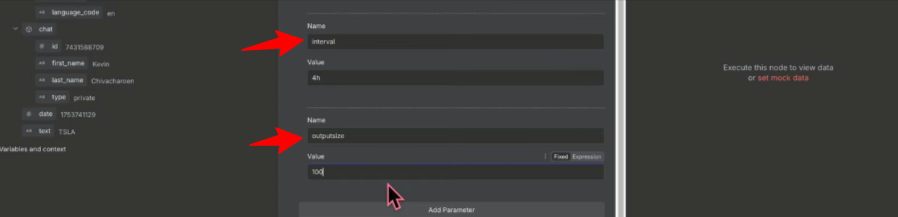
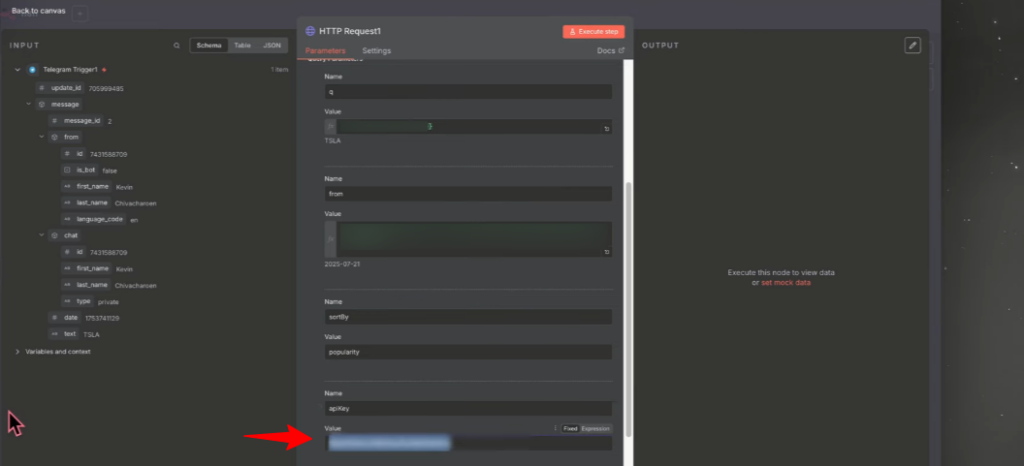
Enable Query parameter >> click expressions >> drag & drop the text (eg., TSLA) in value.
Add another parameter for time interval, output size and API key.
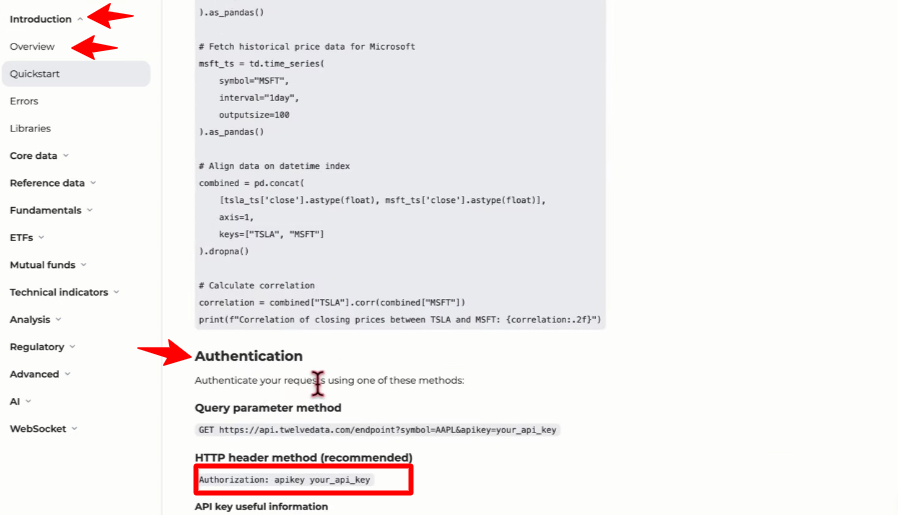
Open API documentation >> overview >> authentication >> HTTP header >> copy apikey your_api_key >> paste in parameter
Go to Homepage (twelvedata) >> API keys >> Secret key >> reveal >> copy new API key >> paste in parameter value.
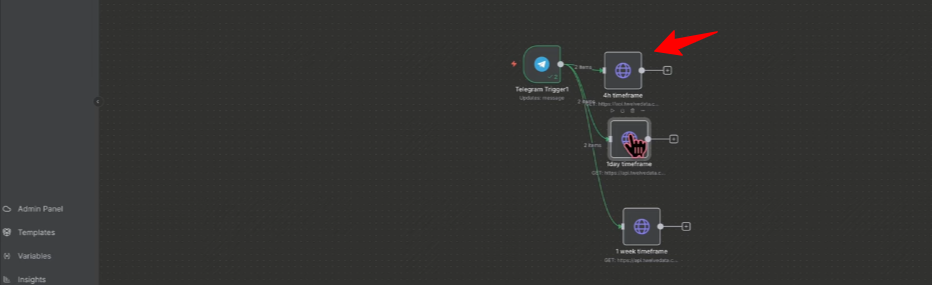
Open n8n workflow >> right click the top node >> copy as shown below.
Click Telegram node >> type request in search box
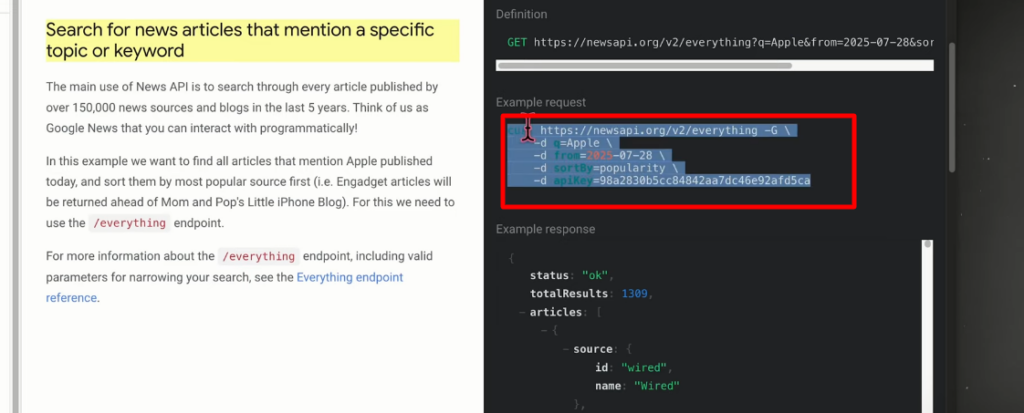
Open newsapi in new tab >> documentation >> search for news article >> copy example request.
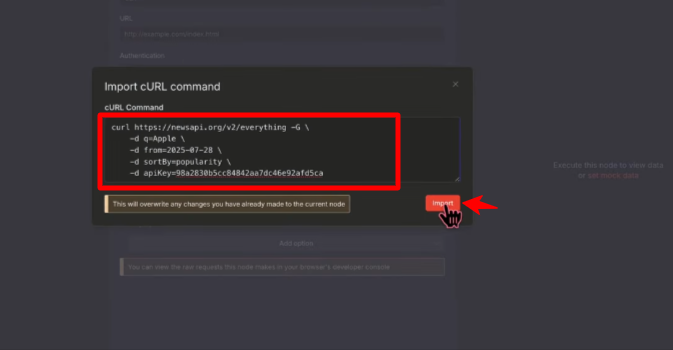
Go to n8n >> click import cURL >> paste example request >> import.
Open Input >> drag text >> Query parameter >> drop in value. (It will generate result)
Open ChatGPT >> write a prompt to generate an expression for n8n that calculates the date 7 days ago and formats it as yyyy-mm-dd.
Copy the expression >> paste in the 2nd query parameter.
Go back to newsapi >> login >> copy Get API key >> paste in query parameter.
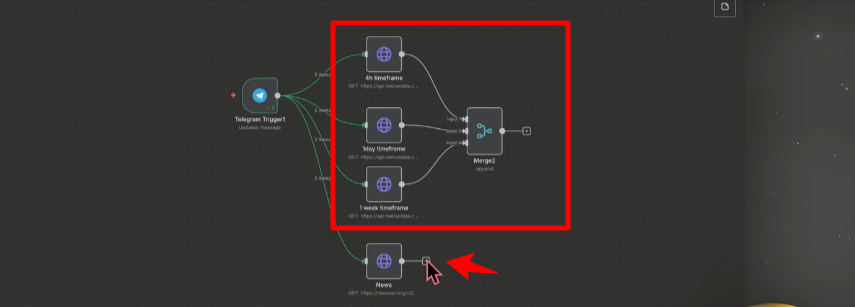
Open n8n canvas >> click + >> type merge >> select inputs (number of timeframes ) >> click execute step.
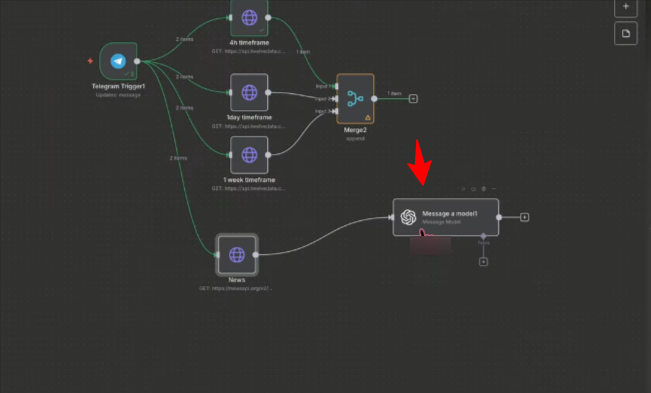
Merge 3 nodes ( used for time interval ) >> click news node >> type openAI >> message model >> create account
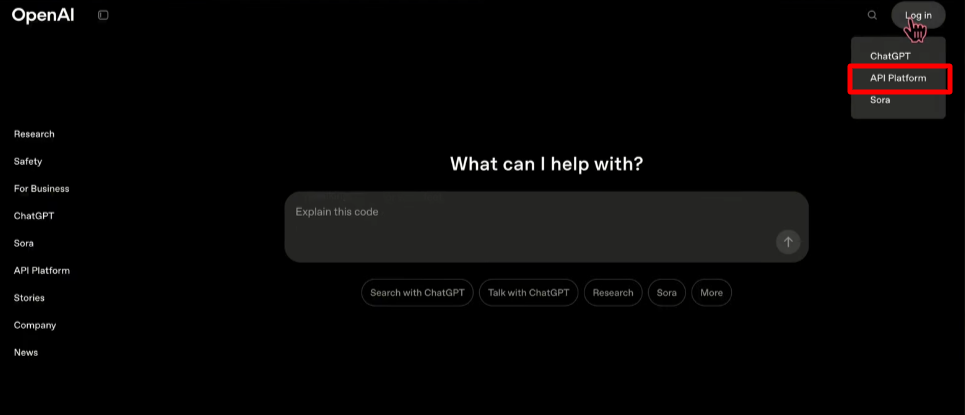
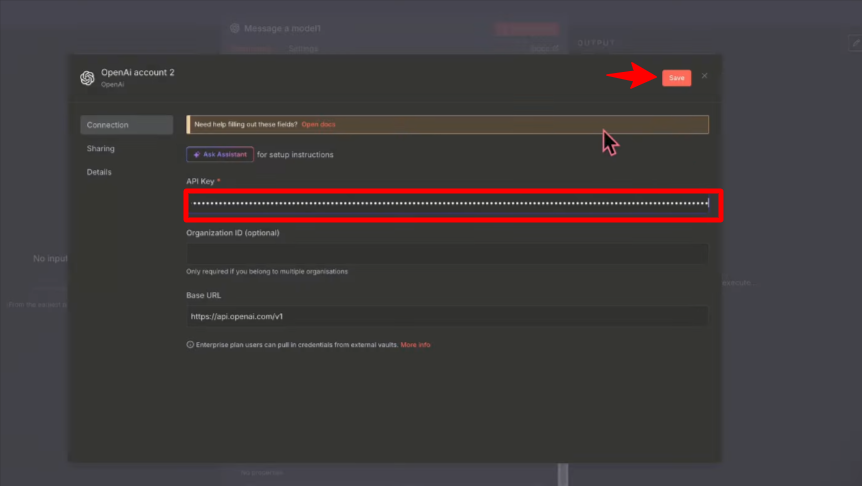
Go to OpenAI >> API platform >> organization settings >> API keys >> create new key >> name it >> copy API key
Open n8n >> paste API key >> save
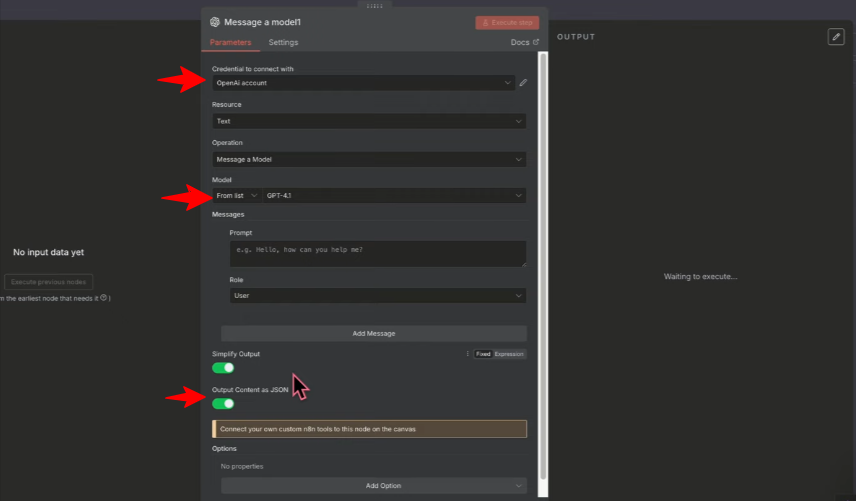
Now, open Go to billing >> add money (e.g., $5) >> add OpenAI account >> Select GPT model >> enable output
Click News node >> execute step >> pin the output >> click OpenAI >> add prompt ( to anayze market data and predict the sentiment as positive, negative or neutral in JSON object).
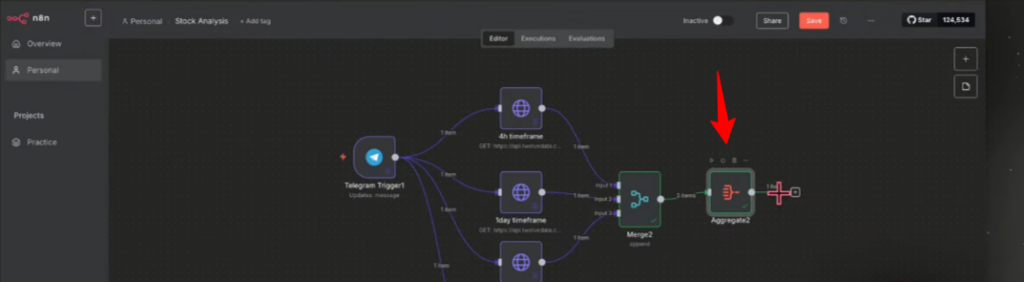
Now, click + icon >> add aggregate node.
( it will combine all the data into a single list )
Copy entire JSON code >> paste in chatGPT >> add prompt ( create n8n code to make data easier for LLM ) >> copy generated code.
Open n8n canvas >> click + >> type code >> paste new code >> pin data.
(Add merge node to combine OpenAI node with code)
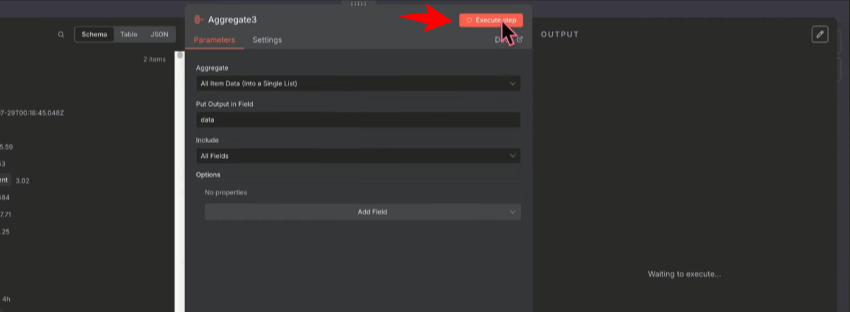
Click + >> type aggregate >> select All item data >> execute.
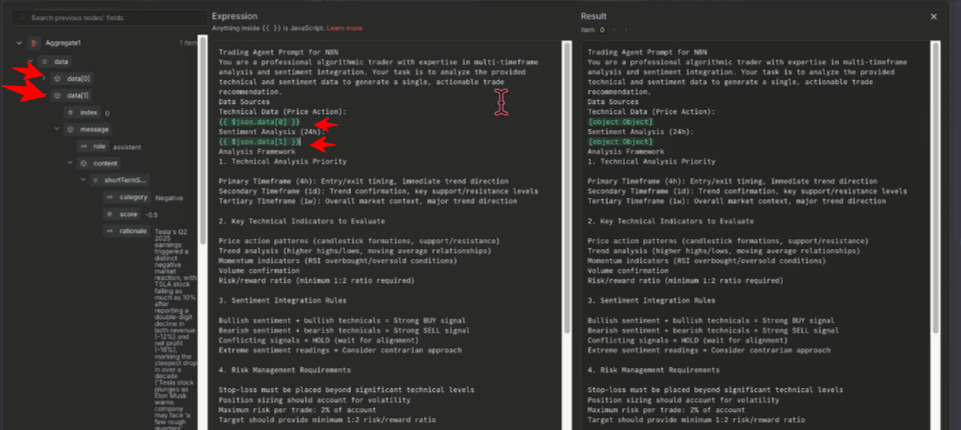
Again click + >> type AI agent >> select Define Below >> expressions >> paste user prompt >> drag data0 & data1 from Aggregator1 >> drop in Expression
(If you’re getting an object, use chatGPT to convert it into JSON. Copy and paste in Aggregator1 )
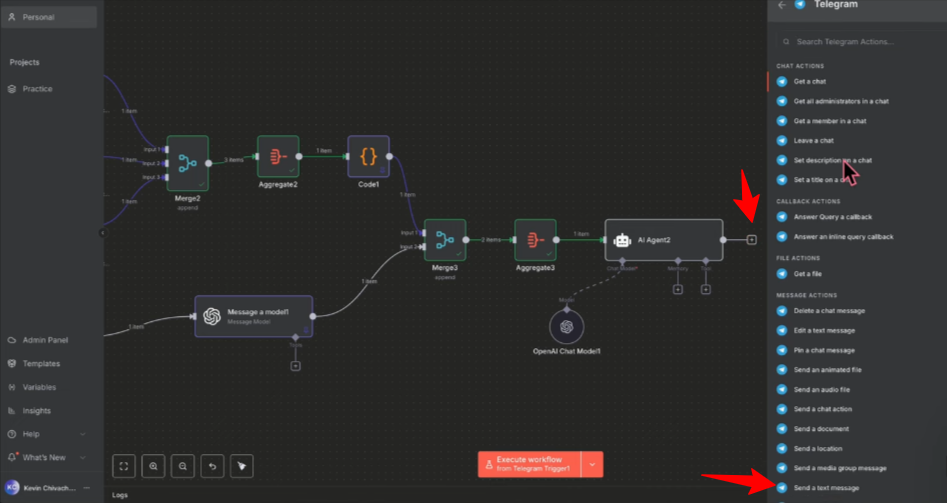
Click + >> type OpenAI chat model >> select model version >> add node >> type Telegram >> click Send a text message
Find Telegram trigger >> chat >> id >> copy id >> paste in parameters >> execute.
By following these steps, you’ve successfully created an AI agent for trading!
Table (AI Agent vs Trading Bot vs Algorithmic Trading)
You’ve probably heard of algorithmic trading, which uses rules and logic to trade. But there are some AI bots as well that work similarly. So let’s compare these two with AI trading agent through a table:
Feature
AI Agent
Trading Bot
Algo Trading
Speed
Nanoseconds
Milliseconds
Sub milliseconds
Adaptability
High
Very low
Manual changes needed
Technical skills
High, as it uses code and ML
Low, needs APIs
High, as it requires calculation & C++
Workflow
Complex ( conditions, resonings)
Automated scripts
Mathematical rules
Data consumption
Reads number/price
Reads number/price
Reads global data
Why Use an AI Agent for Trading?
AI agents are much faster than us because it automates the entire process from collecting data, predicting profit/loss to place orders. We can’t do this together because we need time to collect useful data and analyze equity curves. There are some more benefits of using AI agent for trading such as:
Speed and automation: AI agents are much faster than us because they use a modular approach that deploys sub-agents to search current stock prices. Along with this, FDGA (field programmable gate arrays) and fast API connectivity extract meaningful data and perform trades in nanoseconds.
Emotion-free trading: Many traders invest money in the wrong place at the last moment because of doubts and confusion. But AI is free from this because it reads patterns, applies logic, and makes decisions based on insights. This approach helps AI agents to execute trades in the right place.
24/7 forex monitoring: Stock prices change every day and week due to their demand and supply. And people like us cannot keep track of the ever-changing market value because we have other work too. AI agents work tirelessly to monitor the market and track the exact moment (when prices go up) to make trades.
Data-driven decisions: AI doesn’t make decisions based on guesses like we do, nor does it get influenced by others. It trades based on data it gathers from real-time stock price monitoring. Therefore, it makes right decisions
Benefits for Retail Traders
Before learning the benefits for retail traders, let’s understand what it is. A retail trader is a normal person who invests their personal savings to generate passive income by using apps like Robinhood for trading.
Using an AI Agent for Trading gives multiple benefits to retail traders, such as:
Personal assistant A common man doesn’t have much money to hire data analysts that can research and analyze real-time market prices. But AI agents can do the research work in less time and for less money.
Guidance A beginner or young trader with no knowledge in investment can use AI agents as a guide or mentor to understand the basics of trading. It can convert complex principles of trading into simple examples.
Time management We all cannot keep track of real-time market value due to being busy in our jobs and daily activities, but an AI agent can do this work very efficiently. Apart from this, it trades immediately when the stock price goes up.
Benefits for Institutions
Some institutions collect money from big firms and banks for investment. They are also called institutional traders because they invest large sums of money and use platforms like MetaTrader 4/5.
And this is why they require an advanced AI agent for:
Multitasking Institutions hold money from many large organizations and banks located in different regions and countries. The AI agent collects the real-time market data, calculates profit & loss, and trades at the same time.
Avoids slippage Investing a large amount at once creates high demand and increases the stock price. To avoid this, institutional traders break a large sum of money into multiple orders and invest them individually at different times.
Future stock prediction A normal trader is dependent on economic reports and graphs to analyze market value, but AI agents can predict the future with the help of satellites. It can calculate the demand based on the clients.
Types of AI Agents Used in Trading
By now, you must have understood what AI agents actually are and how they benefit traders. So, now let’s learn about their varieties and how they work to place orders.
Here are the 4 types of AI agents used in trading:
Rule-Based Agents Rule-based AI agents automate a fixed rule set by the trader. They use conditions like, if the price goes up, then buy. These AI agents are perfect for retail traders who don’t want to deal with complexity.
Machine Learning Agents Machine learning agents perform complex tasks. They calculate the global stock market and social media trends, read economic reports and current data for trade exchange, making them fit for institutional trading.
Reinforcement Learning Agents Just like we learn by doing something every day, mostly from our mistakes, this reinforcement agent does the same. It changes its strategies based on the previous outcome and adapts new strategies as the market changes.
Multi-Agent Trading Systems As the title says, “multi-agent trading systems” means the group of multiple AI agents working together to achieve profit. Each AI agent is given a specific task, like one collects data and the other calculates profit.
Core Components of an AI Trading Agent
While using an AI agent, you might have noticed that it gives answers instantly, in just 5 seconds, even if you write a long prompt. And the reason behind this speed and accuracy is the different components that work together.
An AI trading agent also uses similar components that we’ve listed below:
Data Collector: This component gathers current market value, economic reports, news headlines, and equity curves to compare profit and loss. It is the base for all other components.
Data Preprocessing Engine: Data engine filters the collected data to help AI easily understand it. It extracts the useful information (like current stock price) and cleans for the next step.
Feature Engineering Module: This module collects additional clues to help the AI make the right trade. Suppose it predicts that a particular company’s price is going up, it will check past records and the speed at which it’s moving.
Prediction / Decision Model: Decision model uses the conditions (buy/sell) to make the final decision about where to invest. To do this, it takes help from engineering module that collected clues and organized data. If the price is going up, it will buy, and if it’s going down, it won’t.
Risk Management Module: The risk management ensures that the AI doesn’t put all its money into a single stock, instead, it takes the time to invest in different stocks. You can even train your AI agent to win back all the lost money from previous orders using martingale betting strategy.
Execution Engine: This component does the real work. After receiving approval from risk management, the engine uses a trading platform such as MetaTrader and quickly places your order. This ensures that the trade is executed before the exchange rate drops.
Monitoring & Logging System: The monitoring system keeps track of everything. This means that if a trade turns profitable, it follows the same pattern, and if a loss occurs, it examines all the mistakes and corrects them in the next order.
Tech Stack Required to Build an AI Agent for Trading
Although many free AI agents are available on the internet, using them isn’t a safe option. Because these agents are owned by someone else and they can extract your bank account information by using hidden tools. That’s why you should use a personal AI agent.
Below, we’ve mentioned some requirements to build an AI agent from scratch:
Programming Languages To Create an AI Agent for Trading, you need a programming language like C++, Java or Python as it is the building block of whole system. Majority of developers use Python to build an AI agent because it provides pre-built libraries and requires plain english for coding. It means you don’t have to write multiple lines of code, you can write a single sentence using conditions and it will work.
Libraries & Frameworks Libraries and frameworks save a lot of time! You can easily download ready made frameworks created by other developers so you don’t have to build each component or module of an AI from scratch. GitHub has a vast library of pre-built open source tools which means you can download them for free and customize them as per your trading needs.
APIs Without API you can’t connect the components, features and the entire AI agent with the trading platform. You can’t even place orders without APIs because they are the connecting path. Developers use the combination of multiple APIs like Guavy to collect raw data (stock price), Broker for stock exchange and Solana for digital assets.
Common Mistakes to Avoid
Many traders spend days training the AI agent, integrating different tools into it, but it makes the results worse. So, here are some common mistakes that you should avoid while creating an AI Agent for Trading:
Overfitting When you train an AI model based on old data or patterns, it’s more likely to fail or invest in the wrong place because market trends change daily. Therefore, you should use unique data and patterns during training that you haven’t seen before.
Ignoring transaction costs Do not allow your AI model to place multiple orders together and also add the feature of calculating slippage so that you do not have to lose extra money on every order. Because trading platforms also charge some commission in return for their service, so suppose if you made a trade of $5 in which you are making a profit of $1 but the platform fee is also $1, then you will not get any benefit.
No risk management A risk management component is important. Even if the AI learns all the patterns, it can still make mistakes. It’s best to give it a stop-loss condition so it can pull back orders if the price drops even slightly, and to avoid slippage, it won’t invest all its money in a single stock, which will cause the exchange price to drop.
Too complex models Use models (rule-based, reinforcement, machine learning) based on your goals and avoid making them too technical, otherwise all the data will get stuck and it will be unable to process the next steps. If you use multiple AI models and APIs, you will have to check every line of code during a failure, which will waste a lot of time.
No monitoring It’s true that an AI agent will complete all tasks on its own, but leaving it to do so is not a good idea. You need to observe it frequently and train it based on new data. Because market trends change daily, and an outdated AI model can cause failure in times of need.
Is It Legal to Use an AI Agent for Trading?
Yes, it is absolutely legal to use AI agents in trading as long as it is not harming anyone.
Many strict laws ( like the AI Act ) and authorities like the SEC in the United States and the Europe treat AI as a powerful tool that requires monitoring. If you’re a developer building a public AI Agent for Trading then you should ensure that it follows market rules and doesn’t steal users personal information.
AI automates manual tasks and makes the final decisions, but the creator remains legally responsible for its actions. That’s why you should always use a regulated broker to stay compliant with international financial laws.
Security Considerations
Many cybercriminals try to access the AI agents through loopholes so that they can extract the bank account details of the traders. That’s why you need to follow strong security measures while creating an AI Agent for Trading.
We have listed some of the security considerations below:
Avoid fake data Many cybercriminals can poison your AI agent by using fake data and patterns due to which the AI agent will be unable to place orders in the right stocks, making you lose money. Therefore, you should always use authentic sources and data to help AI trace real patterns.
API connectivity It’s the API connectivity that makes sure all the components and trading platforms are connected to your bank account. If a hacker gets hold of the API key, they could withdraw money from your bank account. Therefore, you must use a strong key and not give the AI permission to withdraw money.
Avoid multiple libraries You can use pre-built tools to build your AI agent, but relying entirely on them is a big mistake. Many cybercriminals purposefully create custom AI libraries to automatically extract your data and bank account information.
Access management or IAM The IAM security system ensures that only genuine users can access the AI agent. It uses authentication, authorization, and auditing to do so. First, it verifies your identity, then it decides what you can do and traces your entire activity.
Performance Optimization Tips
Trading AI agents are made up of many components but multitasking and repeated use slows down their performance due to which traders are unable to invest in the right place at the right time.
If you don’t want to deal with such situation in future, then follow these optimization tips:
Low Latency Servers Use a server with data centers close to your broker’s servers. As trading requires good speed, low-latency servers will reduce the distance of data travel between you and the broker. It will minimize delays, ensuring your trades are placed at the exact price.
Multimodal System Having a multimodal system means your AI can analyze different types of data at once, such as text news, price charts, and social media trends, instead of reading just numbers. This helps in making the right decisions by using different information.
Quantization Large and complex AI models cannot perform fast, creating delays in trade execution. Quantization shrinks large AI models by converting complex numbers into simpler units without losing accuracy and helps AI agents to process data quickly.
Prompt Engineering Writing clear prompts helps AI agents to understand and follow specific trading rules and ignore unnecessary information while analyzing data. This improves speed and reduces execution errors
As AI continues to reshape coding across industries, our in-depth article on the Best AI for Embedded Coding highlights cutting-edge tools that help developers build faster, smarter, and more efficient embedded systems for IoT, robotics, and hardware projects.
FAQs
1: Can an AI agent do trading?
Yes, AI agents can do trading by analyzing the current stock market, equity curves and conditions ( if price goes up then >> buy).
2: Which AI is best for trading?
As a beginner with no coding knowledge, you can trust Capitalise.ai for trading and if you’re into long-term investments, you can try Danelfin.
3: Can beginners create an AI trading agent?
Yes, beginners can create an AI trading agent with the help of proper guidelines, pre-built libraries, API tools and authentic market data.
4: How much capital is needed?
The cost of building an AI agent depends on the trader’s necessity. You can build a basic AI agent for $10,000 and an advanced AI agent for $50,000. The prices are not fixed as many developers use pre-built tools as well to reduce time and costs.
5: Can AI Agents replace human traders?
No, AI cannot entirely replace human traders as it needs them as an administrator. AI agents can invest in wrong stocks if they are not trained correctly by humans.
6: Is AI trading profitable?
Yes, AI trading is very profitable because it allows traders to analyze global data, market trends, exchange rates and automate trade without confusion. It saves a lot of time so that we can focus on other things as well.
Conclusion
Changing market trends bring new challenges for traders every day. A common man can’t be online 24/7, examining stock prices and predicting profit and loss. Along with this, doubts and gossips often influence us to invest money at the wrong stock and time.
And the only way to avoid this situation is AI agents that can complete hours of work in minutes. These AI trading agents are specifically designed to note real-time market trends, organize data, predict profits, and execute trades instantly. This means all your trading tasks will be completed in seconds, enabling you to earn profits.
We’ve provided all the information about these agents in this blog. You’ll learn what AI agents are, how they work in trading, their different types, components, why they’re important to use, and how you can Create an AI Agent for Trading.
Hi, I'm Alam! I have been working in the web hosting industry for 4+ years, specializing in server configurations and privacy-focused hosting solutions. My goal is to help you navigate the world of offshore hosting with confidence. I publish new guides and articles here on QloudHost to keep you updated.
Note: Due to the privacy-focused nature of our work, 'Alam' is a professional pseudonym used by our technical lead. Want to learn more? Check out the QloudHost YouTube Channel @qloudhost






Leave a Comment