18+ sites handle huge traffic by pushing most video delivery to global CDNs, using adaptive bitrate streaming (HLS/DASH), and aggressively caching at the edge. Origins are protected behind load balancers and origin shields, while microservices and containers auto-scale based on demand.
Video is transcoded into multiple bitrates, metadata lives in fast databases, and DDoS/bot mitigation filters junk traffic. Continuous monitoring, cost-aware peering, and smart storage tiers keep performance stable and bills predictable.
If you’ve ever wondered how 18+ sites stay fast despite massive, spiky traffic, the answer lives in their infrastructure. This guide explains, in beginner-friendly terms, the exact components and strategies used to deliver petabytes of video reliably. We’ll cover CDNs, ABR streaming, caching, storage, load balancing, databases, security, monitoring, and how to scale without burning cash.
Whether you run a high-traffic WordPress site, a video platform, or a privacy-focused 18+ service, the principles are the same. I’ll share field-tested practices from 12+ years in hosting, cloud, WordPress performance, and cybersecurity—plus where a provider like QloudHost fits in when you need compliant, high-throughput infrastructure with strong privacy posture.
- How 18+ Sites Handle Huge Traffic: The Core Model
- Smart Caching Strategy: From Browser to CDN to Origin
- Load Balancing and Anycast DNS: Dissolving Hotspots
- NGINX for HLS at Origin
- Storage Architecture: Object Storage + Tiers
- Databases and Metadata: Fast Reads, Safe Writes
- Microservices and Autoscaling: Elastic by Design
- Security, Privacy, and Compliance for Adult Traffic
- Privacy-Aware Hosting and “ignored” DMCA Nuance
- Cost Optimization and Network Strategy
- Observability and SLOs: You Can’t Scale What You Can’t See
- Common Pitfalls (And How to Avoid Them)
- Soft Recommendation By Experts
- Implementation Checklist: From Zero to Scalable
- FAQs
- Conclusion
How 18+ Sites Handle Huge Traffic: The Core Model
This section maps the high-level flow from viewer to video while setting the context for the rest of the article. You’ll see how core components work together to keep latency low and availability high during traffic spikes.
At a glance, the architecture looks like this: DNS with Anycast directs users to the nearest CDN edge. The CDN serves cached segments of HLS/DASH video and falls back to an origin shield if needed. Origins sit behind load balancers and WAF/DDoS protection.

Transcoding pipelines produce multiple bitrates stored in object storage. Metadata and user/session data live in relational and in-memory databases. Autoscaling services run on containers/VMs, continuously monitored with SLOs.
CDN-First Delivery: Where Most Performance Is Won
Content delivery networks are the backbone for high-traffic video sites. This section explains why CDNs matter, what features to enable, and how to configure them for adult video traffic patterns.
CDNs cache small, cacheable chunks of video (HLS/DASH segments) close to the user. This reduces round-trips to the origin, lowers bandwidth costs, and absorbs traffic spikes. For 18+ sites, where watch-time and repeat segment requests are high, a well-tuned CDN can serve 90–98% of traffic from the edge.
Key CDN Features to Enable
Edge Routing and Failover
Use health-checked origins and weighted load balancing behind the CDN. If one region degrades, edge routing fails over to healthy origins without impacting viewers.
Adaptive Bitrate Streaming (ABR): Smooth Playback Under All Conditions
ABR ensures videos play smoothly on slow connections and scale up on fast networks. This section covers HLS/DASH basics and the encoding strategy that underpins high watch-time.
18+ sites deliver multiple renditions (e.g., 240p → 1080p+), letting the player switch bitrates when bandwidth changes. Manifests (.m3u8 or .mpd) list available variants and segment URLs. Short segment durations (2–6s) keep buffers responsive, aiding startup time and rebuffering resistance.
Practical Encoding Ladder
Sample FFmpeg Pipeline
ffmpeg -i input.mp4 -filter_complex \
"[0:v]split=5[v1][v2][v3][v4][v5]; \
 [v1]scale=-2:240[v1out]; [v2]scale=-2:360[v2out]; \
 [v3]scale=-2:480[v3out]; [v4]scale=-2:720[v4out]; [v5]scale=-2:1080[v5out]" \
-map [v1out] -c:v libx264 -b:v 400k -g 48 -keyint_min 48 -sc_threshold 0 -preset veryfast \
-map [v2out] -c:v libx264 -b:v 700k -g 48 -keyint_min 48 -sc_threshold 0 -preset veryfast \
-map [v3out] -c:v libx264 -b:v 1200k -g 48 -keyint_min 48 -sc_threshold 0 -preset veryfast \
-map [v4out] -c:v libx264 -b:v 2500k -g 48 -keyint_min 48 -sc_threshold 0 -preset veryfast \
-map [v5out] -c:v libx264 -b:v 5000k -g 48 -keyint_min 48 -sc_threshold 0 -preset veryfast \
-hls_time 4 -hls_playlist_type vod -master_pl_name master.m3u8 -f hls out_%v.m3u8
Smart Caching Strategy: From Browser to CDN to Origin
Getting caching wrong is the fastest way to crash an origin during a spike. This section shows how to control cacheability for pages, manifests, and segments so edges serve most of your load.
Cache HTML lightly (seconds to a minute) with ESI/edge includes for personalization. Cache HLS/DASH manifests for 30–120 seconds;

cache video segments for hours or days. Normalize query strings and drop non-essential cookies from cache keys to avoid cache fragmentation.
Varnish/Edge Cache Key Example
sub vcl_recv {
  if (req.url ~ "\.(ts|m4s|mp4)$") {
    # Ignore analytics params in cache key
    set req.url = querystring.remove(req.url, "utm_source|utm_medium|fbclid|gclid");
    unset req.http.Cookie;
  }
  if (req.url ~ "\.(m3u8|mpd)$") {
    # Cache manifests but shorter
    set req.grace = 60s;
  }
}
Load Balancing and Anycast DNS: Dissolving Hotspots
Even with a powerful CDN, origins and APIs must scale horizontally. This section covers L4/L7 load balancing, global DNS routing, and connection reuse for high throughput.
Use Anycast DNS to route users to the closest POP and health-check origins to remove bad nodes automatically. At L7, put Nginx/Envoy/HAProxy behind cloud load balancers.

Enable keep-alive, request buffering for HLS segments, and connection pooling to databases and object storage.
NGINX for HLS at Origin
server {
  listen 443 ssl http2;
  server_name videos.example.com;

  # Security and perf
  ssl_protocols TLSv1.2 TLSv1.3;
  gzip off; # Use Brotli/HTTP2 for manifests; don't compress video
  sendfile on;
  tcp_nopush on;

  # Cache control
  location ~* \.(m3u8|mpd)$ {
    add_header Cache-Control "public, max-age=120";
    try_files $uri =404;
  }

  location ~* \.(ts|m4s|mp4)$ {
    add_header Cache-Control "public, max-age=86400, immutable";
    try_files $uri =404;
  }
}
Storage Architecture: Object Storage + Tiers
Video libraries grow fast and cold content dominates. This section shows how 18+ sites use object storage, hot/warm/cold tiers, and replication to balance performance and cost.
Keep the active catalog in “hot” object storage (S3-compatible) fronted by CDN. Move low-demand content to cheaper “cold” tiers with lifecycle rules, but keep index manifests in hot storage for quick listing.

Replicate across regions for durability and to park an origin close to your biggest audience. Use multipart uploads and checksum validation for ingest reliability.
Throughput Tips
Databases and Metadata: Fast Reads, Safe Writes
Views, likes, comments, tags, and recommendations are read-heavy with bursty writes. This section outlines a pragmatic data stack for stability under load.
Use a primary relational DB (MySQL/PostgreSQL) for canonical data. Add read replicas and a Redis cache layer for hot keys (video metadata, user sessions, AB test flags).
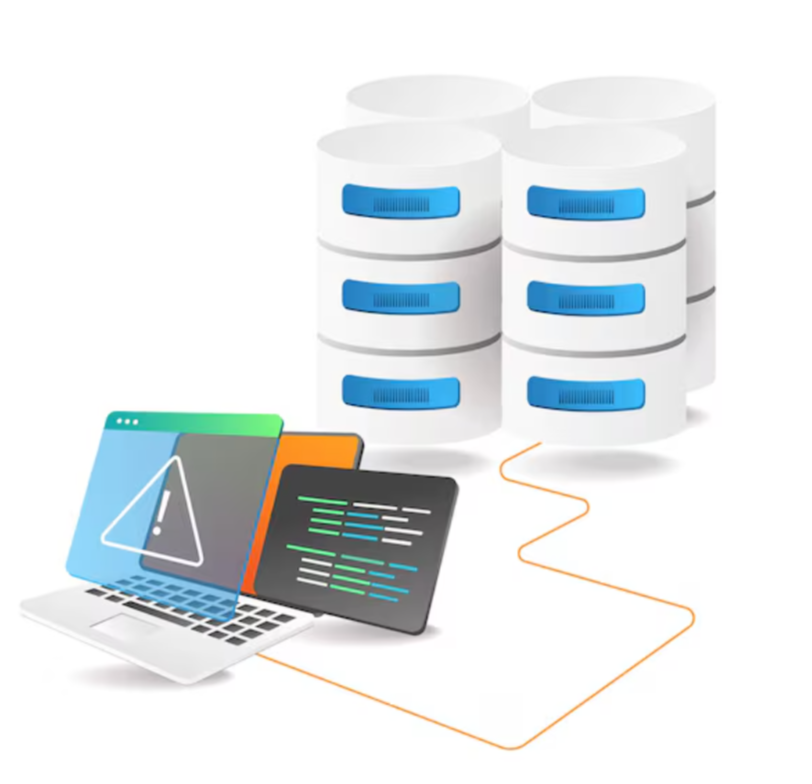
Store analytics and events in a time-series store or a Kafka → object storage pipeline. For search, index titles/tags in OpenSearch/Elasticsearch with proper shard planning and ILM (Index Lifecycle Management).
Patterns that Work
Microservices and Autoscaling: Elastic by Design
Traffic to adult platforms is cyclical and campaign-driven. This section covers containers, orchestration, and scaling policies that keep costs aligned with demand.
Containerize stateless services (APIs, workers) and orchestrate with Kubernetes or Nomad. Use Horizontal Pod Autoscalers on CPU/RPS/queue depth. Split workloads by criticality: playback APIs and manifests get higher priority; batch transcodes scale opportunistically. Keep stateful layers (DBs, Kafka) on tuned VMs with explicit capacity planning.
Pragmatic service boundaries
Security, Privacy, and Compliance for Adult Traffic
Trust is non-negotiable for adult platforms. This section covers DDoS, WAF, bot mitigation, age-gating, DMCA workflows, and privacy-focused hosting choices.
Protect your edges with DDoS scrubbing (L3–L7), rate limiting, and anomaly detection. Use WAF rules to block common CVEs and country-level blocks where required.
Sign video URLs or manifests to prevent hotlinking. Implement age verification and content classification per your jurisdiction. Build a DMCA/notice-and-takedown workflow with audit logs and SLA targets.
Privacy-Aware Hosting and “ignored” DMCA Nuance
Some operators seek DMCA-ignored hosting to reduce overreaching takedowns. In practice, this means choosing jurisdictions with different notice regimes and robust privacy laws.
It does not exempt you from local or international laws. Work with counsel, maintain clear ToS, and document moderation decisions.
Providers like QloudHost offer privacy-forward, high-throughput hosting with clear boundaries and abuse processes—useful when operating in legitimate gray zones but still aiming to respect legal frameworks.
Cost Optimization and Network Strategy
Bandwidth is the biggest line item for video sites. This section explains how to reduce egress costs without sacrificing UX.
Increase cache hit ratio with prefetching, tiered caching, and per-title encoding. Use multi-CDN with traffic steering to shift load to the best price/quality POPs.
Establish direct peering with last-mile ISPs when volumes justify it. Compress manifests with Brotli, minify HTML/CSS/JS, and lazy-load thumbnails. Consider AV1 for cold catalog to save 30–50% on bandwidth as device support grows.
Budget Guardrails
Observability and SLOs: You Can’t Scale What You Can’t See
Great uptime comes from measuring what matters. This section sets realistic targets and telemetry for adult video workloads.
Track SLOs for start time to first frame (TTFF), rebuffering ratio, manifest error rate, and cache hit ratio. Instrument every layer: player metrics (via JS SDK), CDN logs (edge status, country/ASN), origin logs, DB query latency, and queue depth.
Centralize in a time-series system (Prometheus/Grafana, OpenTelemetry) with red/yellow/green dashboards and on-call runbooks.
Capacity Playbook
Common Pitfalls (And How to Avoid Them)
Avoiding a few classic mistakes can save you from late-night incidents. This section calls out the big ones and offers fixes you can apply today.
Soft Recommendation By Experts
Choosing infrastructure is about matching traffic patterns to the right mix of compute, storage, and delivery. This section briefly explains where QloudHost typically helps operators of privacy-sensitive, high-traffic video sites.
If you need high-throughput origins with NVMe, S3-compatible storage, global CDN options, and a provider comfortable with adult workloads and strong privacy expectations, QloudHost can help.

We focus on: performance-tuned servers, DMCA-ignored hosting in vetted jurisdictions (with clear AUP), DDoS/WAF integration, and hands-on WordPress/video optimization. The aim is simple: predictable performance and transparent guidance, not vendor lock-in or hype.
Implementation Checklist: From Zero to Scalable
If you’re building or replatforming, use this list as a pragmatic sequence. It aligns with what top 18+ sites already do in production.
FAQs
How 18+ Sites Handle Huge Traffic
These concise answers address common questions seen in search and support threads, optimized for quick understanding and snippet eligibility.
Do 18+ sites use special CDNs?
They use mainstream CDNs with large global footprints, often in a multi-CDN setup. What’s “special” is configuration: cache keys tuned for HLS/DASH, origin shields, signed URLs, tiered caching, and Anycast routing to reduce tail latency.
How do they prevent servers from melting during spikes?
By pushing 90%+ of traffic to the edge via CDNs, keeping origins minimal and stateless, autoscaling APIs/packagers, and using message queues to absorb bursts. Real-time monitoring and rate limits protect backends from unbounded concurrency.
What’s the best video format for browser compatibility?
H.264 in HLS/DASH remains the compatibility baseline. Sites add HEVC or AV1 for cost savings where device support is strong, but keep H.264 renditions for legacy browsers and older mobiles.
How do adult sites handle legal and DMCA issues?
Through clear Terms of Service, age verification, content moderation, and a notice-and-takedown process with audit trails. Some choose jurisdictions with different notice regimes, but compliance with applicable law and platform policies is still required.
Can I build this on WordPress?
Yes, if you offload video to a CDN and separate the playback layer. Use WordPress for pages, taxonomy, and SEO; serve HLS/DASH from an origin behind a CDN. Caching plugins, object cache (Redis), and an optimized theme are essential for high-traffic bursts.
Conclusion
18+ sites stay responsive under enormous traffic by leaning on CDNs, adaptive bitrate streaming, strict caching, and elastic microservices—while protecting origins with load balancers, shields, and DDoS/WAF layers.
Storage tiers, smart encoding, and multi-CDN steering control costs without hurting UX. With solid observability and a realistic compliance posture, this playbook scales from the first million views to sustained global peaks.
If you’re planning or upgrading a high-traffic video platform, apply the checklist above and validate with load tests.
And when you need performance-tuned hosting, privacy-aware jurisdictions, and hands-on guidance, QloudHost can provide the infrastructure and expertise to make it reliable from day one.